


At a time when rock songs were expected to be short, radio-friendly, and tightly controlled, the Allman Brothers Band did something radical. They took a blues-based composition and stretched it into a 23-minute live performance that refused to be contained by convention. “Whipping Post,” was recorded on At Fillmore East in 1971. Greg didn’t know it at the time he wrote the song, but the song will change everything — for him, for the band, while revolutionizing the potential of rock music. Eventually, it evolves into a 23-minute live epic, earning a place on the Rock and Roll Hall of Fame’s list of 500 Songs That Shaped Rock and Roll.
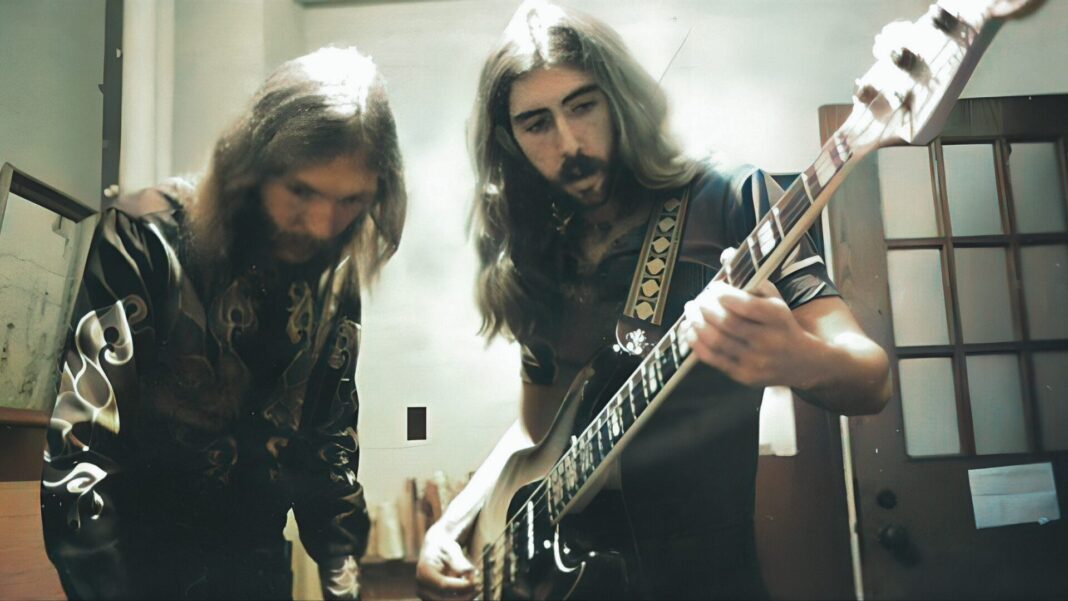
The song opens with Berry Oakley’s ominous bass figure, establishing a sense of forward motion and tension before the rest of the band even enters. Duane Allman and Dickey Betts circle one another, trading ideas rather than competing, creating a conversational dynamic that felt closer to jazz than to traditional rock.
At the heart of the song is Gregg Allman’s vocal, delivered not as a constant presence but as an anchor point. The famous refrain—“Like I’ve been tied to the whipping post”—lands harder because it isn’t repeated endlessly. Instead, it punctuates the performance, grounding the listener emotionally before the band once again ventures into the unknown.
Musically, the song challenged expectations from the very beginning. Its introduction unfolds in an unconventional rhythmic pattern that feels unsettled and off-balance, adding to the song’s sense of struggle and unease. Rather than counting time in a traditional way, the band lets the rhythm feel intuitive and elastic, proving that complexity doesn’t need to announce itself—it just needs to feel right.
Around the halfway point, “Whipping Post” takes its boldest turn. The structure dissolves, the volume drops, and the band slips into a loose, exploratory passage that feels as if it could fall apart at any second. Jazz-inflected lines, fragments of melody, and near-silence coexist, testing both the musicians’ trust in one another and the audience’s willingness to follow them without a map.
By the time the final moments arrive, the listener hasn’t just heard a song—they’ve experienced a journey, one that moves through tension, release, chaos, and control.
The impact of that 23-minute performance was immediate and lasting. “Whipping Post” helped redefine what a live rock recording could be, proving that extended improvisation could be emotional, coherent, and commercially viable. More than five decades later, it still stands as a turning point—not just for the Allman Brothers Band, but for rock music itself.
Learn more about the story behind the song.

